Friday, 27 September 2019

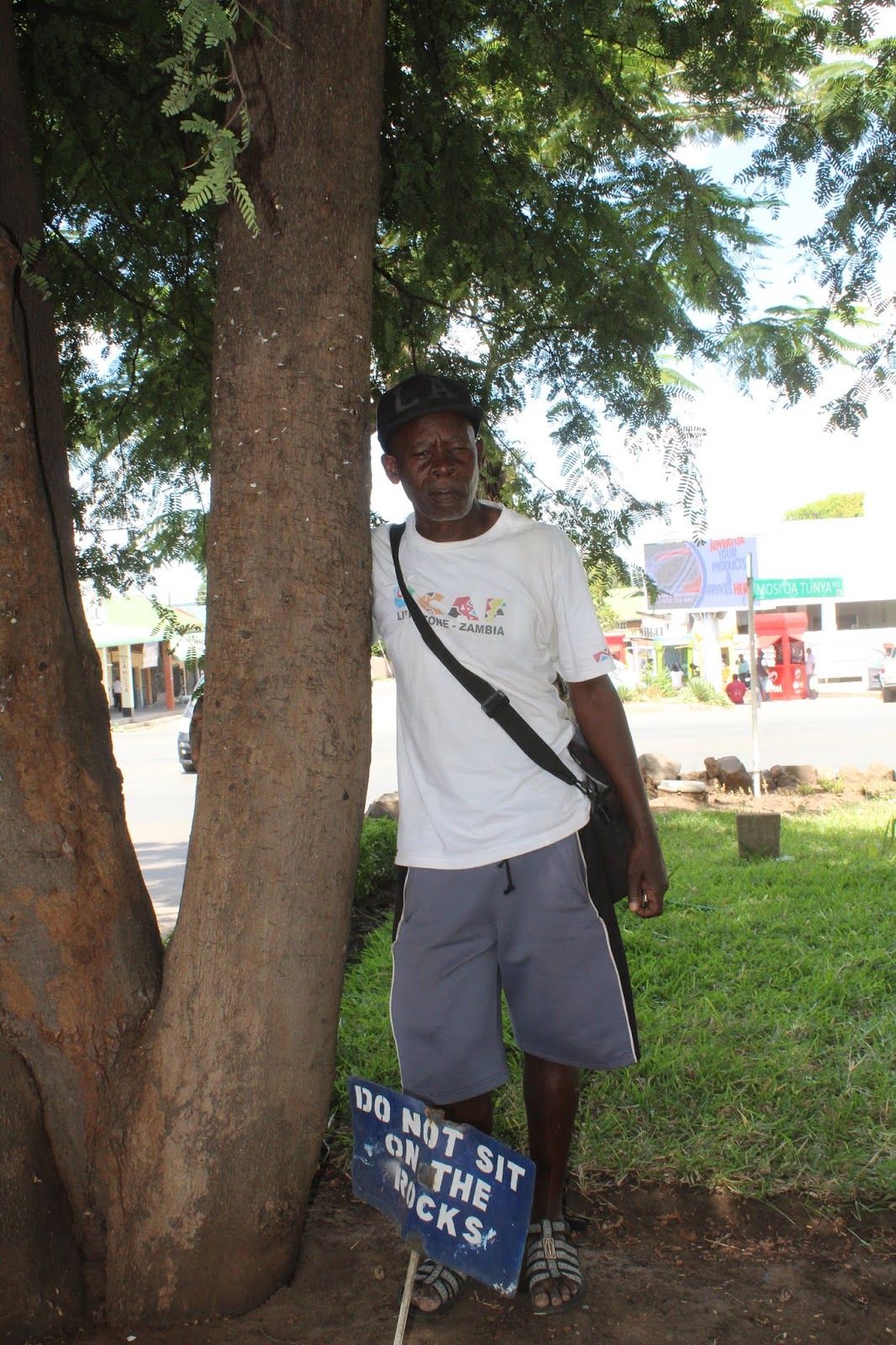
MEET UNCLE BEN: 74-year-old passionate tree planter who has planted countless trees

THE same way India has Jadav Payeng, known as the 'Man of the Forest' after he single handedly planting an entire forest and Kenya’s 2004 Nobel Prize winner Wangari Maathai, Livingstone has Benjamin Mibenge.

Like the famous Jadav and Prof. Maathai, Benjamin fondly known as Uncle Ben here in Livingstone has planted quite a number of trees.

He is the one behind most of the trees planted in Livingstone, some of them dating as far back as 1985.

He may not have planted a forest like Jadav, or won a Nobel Prize like Prof. Maathai, but Uncle Ben is can be credited for being behind most of the green vegetation in the tourist capital.

In fact, as Lusaka mayor Miles Sampa would clearly confess, you may not cut down any trees in the tourist capital without facing the ‘wrath’ of Uncle Ben.

One morning, while Mr Sampa was provincial minister, he decided to bring down what he called overgrown trees at his house - a ministerial residence.

That didn’t go well with Uncle Ben.

“Somebody just came up and told me that they have cut down four trees in the minister's house. The following day, I went to the minister’s office in the morning and I sat there for quite some time because I really wanted to see him over the same,” he recollects.

Despite being told that Mr Sampa is busy and won’t be seeing him anytime soon, Uncle Ben waited. “I said I will wait and when he finally came out, I approached him and confronted him about the trees he cut down. He agreed and said it was his house and he had every right to cut down the trees. He said there were snakes and what not.

“I argued with him saying the house was a public house and if indeed, there were snakes in those trees, he would have called the Department of National Parks and Wildlife,” he recalls. Well, the heated argument, on that day ended with Mr Sampa getting into his ministerial vehicle and driving off - angrily albeit.

“After two or three weeks, in the morning, I got a call and it was from Mr Sampa. He told me that he was coming in a weeks’ time to bring with him a hundred trees to replant at the ministerial house and surrounding areas. I organised my members from the Chongololo club and we planted a couple of them and continued with the rest at a later stage,” he says.

Since that day, Uncle Ben has but only nice words to say about the Lusaka mayor. “It is from there that I have a lot of respect for that young man [Mr Sampa] because very few people at the top would do what he did - realise their mistake, accept and make amends. They are very few and up to date, I really praise him for that. It was a heated thing but what he did is something very few people in this world, at his level would do,” he says.

Uncle Ben, the conservationist was born on April 3rd 1945, in Mansa's Kalembula Village in Matanda area.

He is Ushi by tribe. "I grew up with my grandfather whom I share the same name and it is from him that I learnt a lot of things," he says. He adds: "The things he used to do, you would think that he was a very cruel man."

Uncle Ben says it was not until growing up that he realised that the disciplinarian upbringing was actually going to yield positive results in the future.

"He a very good environmentalist because of the activities he was involved in. He was a hunter, a subsistence farmer, a fisherman and a lot of other things. Most of these things, the was very strict. If it was ploughing, he would always mix crops. If we went for fishing, he would only use the appropriate nets, those starting at 3 inches and above," he says.

He did his primary school in Kafue and his secondary school in Mkushi at Nkumbi International College in 1968. "When I completed school, my wish was to become a teacher, but my principal refused and suggested that I go and study art and that is how I went to Evelyn Hone College," he says.

He was at Evelyn Hone College from 1971 to 1974. After graduating in 1974, he worked for the Zambia Printing Company for one year and later went on to work for Zambia Information Services (ZIS) now Zambia News and Information Service (ZANIS) from 1975 to 1985 as a graphic designer and exhibitions officer.

Throughout that time, the environmentalist and conservationist aspect of him was always with him. "It’s something that is inborn because of the people I grew up with, especially my grandfather who was always cautious of the environment. When I started work in 1975, that’s when I started this thing of planting trees and things like that. So, from 1975 to date, I have always been planting trees. 

He plants approximately 12 trees a week, translating to over 25, 000 in a space of 44 years. “Wherever I go, each house I stayed in, I try to see if I can plant trees,” says Uncle Ben who is a member of the Wildlife and Environment Conservation Society of Zambia since the 1980s.

He is married to Selina Shwaba, his high school sweetheart and they have seven children - three boys and four girls.

He moved to Livingstone in 1985 when he joined National Heritage. “I was also an honorary member of the Wildlife police and also an honorary member of the forestry department where I was very strict,” he says.

He says while working for the National Heritage, he attended environmental conservation trainings in the United Kingdom.

Asked why he has so much passion about environmental conservation, Uncle Ben's retraces it back to his grandfather and a Sylvester Chisumpa whom he worked with while at National Heritage.

“...he was working under a certain white man and we worked with him for many years. He had a lot of passion for trees. He always moved with a knife, he would crack trees and seeds and I only learnt that you can actually plant indigenous trees,” he says.

Uncle Ben also recalls a time in 1989 when he protested to First Republican President Kenneth Kaunda in one of his visits to Livingstone to halt the cutting down of trees at the Munali Hills area.

“I took advantage of the President’s visit here and wrote two placards saying ‘Protect the Munali Hills, the forest is going’ and among the crowd, he saw the poster and he called me to show everybody what the placards were talking about," he says.

He is now calling on people to continue supporting him and his cause. “When I was starting, it wasn’t easy because many people didn’t take me seriously. But today, that has changed,” he says.

Today, most of the trees planted within and around the central business district were planted by him.

“Planting is the easier part, but taking care of these trees is the most difficult. Many are times I have to push the council to water these plants,” he says.

He also says there is a need for more awareness campaigns to sensitise the people on the importance of planting trees.

This  article was published in the Zambia Daily Mail Newspaper on September 12, 2019 on this link  http://www.daily-mail.co.zm/uncle-ben-passionate-tree-planter/


North-Western province chiefs bemoan raw development deals: they say mines not benefiting subjects


“WE may be poor, but we deserve better.”
These were the words of Solwezi Catholic Diocese Bishop Charles Kasonde in his opening speech at the three-day North-Western province Chiefs Indaba held recently in Solwezi.
In truth, the theme was: “Our Land, Our Future” but you would be right to say the deliberations at the indaba were centred on the eight worded sentence by Bishop Kasonde.
The indabe which was convened by Caritas Zambia with support from Swedish faith based organisation Diakonia under the Strengthened Accountability Programme (SAP) attracted about 24 chiefs and representatives from Solwezi, Kalumbila, Kasempa, Mufumbwe, Manyinga, Kabompo, Zambezi, Mwinilunga and Ikeleng'e districts.
The SAP which is now in its second phase aims at advancing the rights of women, men, the poor and youths to hold duty bearers accountable and to demand improved service delivery and sustainable use of natural resources.
It also seeks to enhance target media’s ability to produce programming that improves duty bearers; accountability and responsiveness to rights holders’ demands for improved service delivery, sustainable use of natural resources, gender equality and corporate social responsibility among others.
And that is exactly what was being advanced at the indaba.
North-Western which in other circles is referred to as the new Copperbelt is endowed with many natural resources that range from natural water bodies, forest reserves and mineral wealth among others.
But despite all the wealth and potential, the province is still regarded as one of the poorest in the country.
It is on this backdrop that Bishop Kasonde urged duty bearers to trade cautiously and only allow development that benefits the people, while promoting peace and justice in the region.

“I am not saying we become enemies of development but we pay attention to what sort of development that enhances us and improves the lives of many people and not a few with egoistic tendencies," he said.
Bishop Kasonde said there is need to guard jealousy the land resource because not all investment can benefit the people.
He said duty bearers should embrace development which is appreciated by the people and benefits the local communities.
"I encourage you our traditional leaders to continue being proactive and work with the Government in safeguarding our cultural heritage, land and environment for the sustainable ecological well-being of our people," he said.
North-Western Province boasts of many sources of Rivers that run their waters throughout the year because of the environment that has been well preserved but are now under threat from industrialisation.
"Due to development and industrialisation, our land may remain vulnerable and susceptible to the depletion of forests, excavation of River sources and rampant degradation of our environment," he said.
Chief Ishindi of the Lunda speaking people of Zambezi district suggested for a mechanism that allows for chiefdoms to have a 10 per cent stake on taxes collected from mines in the region.
Whether that is feasible or not, the suggestion was backed by other chiefs, including Caritas Solwezi projects officer Lewis Miyanda.
He suggested that chiefdoms push for a law that will enable them to own shares in mining companies in the region as opposed to depending on corporate social responsibility programmes to improve the livelihoods of people in communities.
Mr Miyanda said passing such a law will give chiefdoms a sense of ownership to their natural resources.
"There is no way you could be living at the mercy of the mine investors through corporate social responsibility. These natural resources belong to you and your people," he said.
The chiefs also petitioned Government to prioritise the awarding of mining licences to local communities to enable local people benefit from their God given natural resources.
The chiefs wondered how some mining and exploration licences are issued without their consent.
They urged the Government to only issue mining and exploration licences to prospecting investors only after consent letters are given by the chiefs and communities have agreed to the proposed investments.
"While the Ministry issuing these licences is in Lusaka, we only receive documentations which we are expected to sign. In such cases, various chiefs have been robbed off their land," they said in a communique read by Chietainess Nyakuleng'a of the Lunda speaking people of Zambezi district.
"We are concerned about the lack of a prescribed criteria for the issuance of exploration and mining licences which disadvantages potential investors that could bring meaningful development to the host communities because the dormant investors hold on to licences for too long without doing anything," they said.
The chiefs are dismayed with assertions that they consent to selling land to foreign investors.
This came as a result of Zambia Environmental Management Agency (ZEMA) North-western provincial principal inspector Morrison Songwe cautioned chiefs against consenting to certain projects without consulting.
He said: “The problem is that some of you agree to these developments before the implementation stage, making it difficult for us to act once the project has been approved already.”
But in the communique, the chiefs argued, saying: “How can we be accused of selling more than 250 hectares when we are not allowed to do so. We the chiefs understand the need for our land which is our birth right and that of our children that will live on it for years to come."
How about the gold rush in Mwinilunga?
It is real!
Chief  Chibwika’s representative Isaac Mungwala said the situation in Kasenseli village has normalised after the deployment of over 45 police officers to the area to keep vigil.
“We do not need any investor from overseas to come and get the gold and leave without our people benefiting,” he said.
Chief Musele of Kalumbila district advised Chief Chibwika to source for a mining licence to permit the chiefdom to mine the gold legally, for the benefit of his subjects.
“That gold is yours! Just follow the guidelines of the law and start mining it because what we should be discouraging is illegal mining,” he said.
From the deliberations and with the words of Bishop Kasonde still echoing, it is clear that most of the chiefs in the region feel they are getting a raw deal from the mines and the natural resource endowment in the region.
Senior Chief Sikufele of Manyinga district bemoaned the bad state of roads and bridges in his area despite having many investors in the area.
“We don’t even have any Government girls’ school in the province apart from Mukinge Girls Mission Secondary School which is a Catholic school. This is not right,” he said.
The chiefs also urged mining companies operating in the province to be consultative and prioritise the needs of the people when implementing corporate social responsibility programmes.
Government on the other hand expressed concern on the increase in land wrangle cases in the province.
In a speech read for him by assistant secretary Beatrice Muyambango, North-Western Province permanent secretary Willies Mangimela called on chiefs to ensure proper land management and administration to avoid the land wrangles as they push for better deals.

Monday, 12 August 2019

Community radio as watchdog: making listening clubs effective in holding leaders accountable

LESSLY Chibele is a member of the Voice of Kalomo Community Radio station’ Luyaba radio listening club.
Luyaba is a satellite community in Zimba about 54 kilometres from Kalomo town.
She says being a member of the club has helped her in more ways than one.
“Before I joined the radio listening club, I did not know that I had the power to question our leaders on matters affecting us,” she says.
Lessly
Ms Chibele is one of the 35 members of the listening club that gather under a tree every Monday to listen to the People’s Voice, a radio programme that airs on Voice of Kalomo.
The hour-long programme is a Media Institute of Southern Africa (MISA) Zambia Chapter sponsored programme.
The programme is made possible with funding from Diakonia, a Swedish non-Governmental organisation under its Strengthened Accountability Programme (SAP II).
Under the SAP II programme, Diakonia is working with MISA Zambia, Women for Change and also Caritas Zambia to increase people’s awareness on good governance and enhance citizens’ participation in governance.
The project started in February and will run for two years.
Because of the project, Ms Chibele foresees a tough time for all those that will aspire for public office in the coming elections.
“Things have changed from the time that we launched the project and all those aspiring for public office will not have it easy this time around because now, we know what we want,” she says.
How does it work, perhaps you might be wondering?
“We meet every Monday and listen to the radio programme that features civic leaders. After that, we pick topics that are closer to us and dissect whether or not our interests are being represented,” explains Frank Siluwaile, the club’s chairperson. 
Not only that.
“We have also been empowered with a phone to call in on these radio programmes and hold these leaders accountable. Where we can, we applaud them and where we want them to do more, we tell them,” he adds.
And on this particular day, the host on the radio programme was Zimba Town Council chairperson Grave Muleya.
As usual, the group is gathered under a tree, surrounding a car with doors open, listening to the radio programme.
Others would be seen with paper and pen, busy taking notes and waiting for the phone lines to open so that they can ask Mr Muleya who touched on a number of cross cutting issues, their burning questions.
The group listening to a radio program.
“For a long time, pregnant women have cried for a maternity wing at the clinic and up to now, there is nothing. You also said you were going to build us a market shelter but up to now, we have not seen these things. What is happening,” he was asked.
Another one queried Mr Muleya on when Government will consider upgrading the clinic and introduce a dental facility.
“Whenever we want to seek dental services, we always have to go as far as Zimba to access them. We want one here too,” he said.
Among the other issues the club members raised were the need for speed humps, improved water supply, cattle diseases and also the model being used by the Food Reserve Agency (FRA) to sell maize.
Yes! Mr Muleya did attend to most of the issues that were raised.
“Government will try to address most of the issues raised though some of them might not be attainable, most of them will be addressed,” he said.
Well, whereas calling in and holding the civic leaders accountable is one thing, implementation and fulfilling them could be another.
Nonetheless, the people of this community are happy that they have been empowered with skills of holding their leaders accountable.
“We never used to pay attention to these things. But ever since this programme started, we have been taught a lot of things and we now understand that these leaders owe us and they should be answerable to us,” said Barbara Simbwalanga who is the vice chairperson of the Njokwe radio listening club.
Jane Chirwa is MISA Zambia programmes manager and she is optimistic that the project is yielding fruits.
“The project is all about increasing awareness of good governance and encourage communities to take a leading role in holding civic leaders accountable,” she says.
How does MISA Zambia come in?
“As MISA Zambia, we have running projects with partner community radio stations under our Good Governance programme and it is with those same partner radio stations and their audiences to encourage and engage communities through different platforms and fora,” she says.
Participants pose for a group photo.
Diakonia programmes officer Maimbo Kalenge says her organisation will continue to empower communities with knowledge and skills that will lead to livelihood change.
“How we work is that we will not give people money or handouts, but we will impart knowledge in people, through our partner organisations with a presence where we are not that will open their eyes and change the perspective and mindset towards self development,” she says.
In Mapatizya, WfC is at the SAP II centre stage there.
The organisation has been holding training camps with traditional leaders to sensitise them on issues to do with gender equality.
WfC monitoring and evaluation manager Shadreck Chembe says the organisation has partnered and trained a number of headmen in the small mining community and surrounding communities.
“I am very happy that today I have been given an opportunity to learn about the dangers of gender imbalance. Before this workshop, I always used to fancy a male child to a female,” says Edwin Mweene, a local that underwent a gender mainstreaming training.
The SAP II project is not being implemented in Southern Province only.
With different partners, Diakonia which has been in existence for over two decades is implementing the project countrywide.

Pick of the day

TEENAGE PREGNANCY, EARLY MARRIAGES: Mansa district has in the recent past recorded a reduction in the number of related cases

IN the heart of Mansa, a district once grappling with the alarming rates of teenage pregnancies and adolescent school dropout has undergone ...

Top Hits