Friday, 24 June 2022

NATASHA IS MISS ZAMBIA: 25-year-old finally gets her hand on ultimate crown


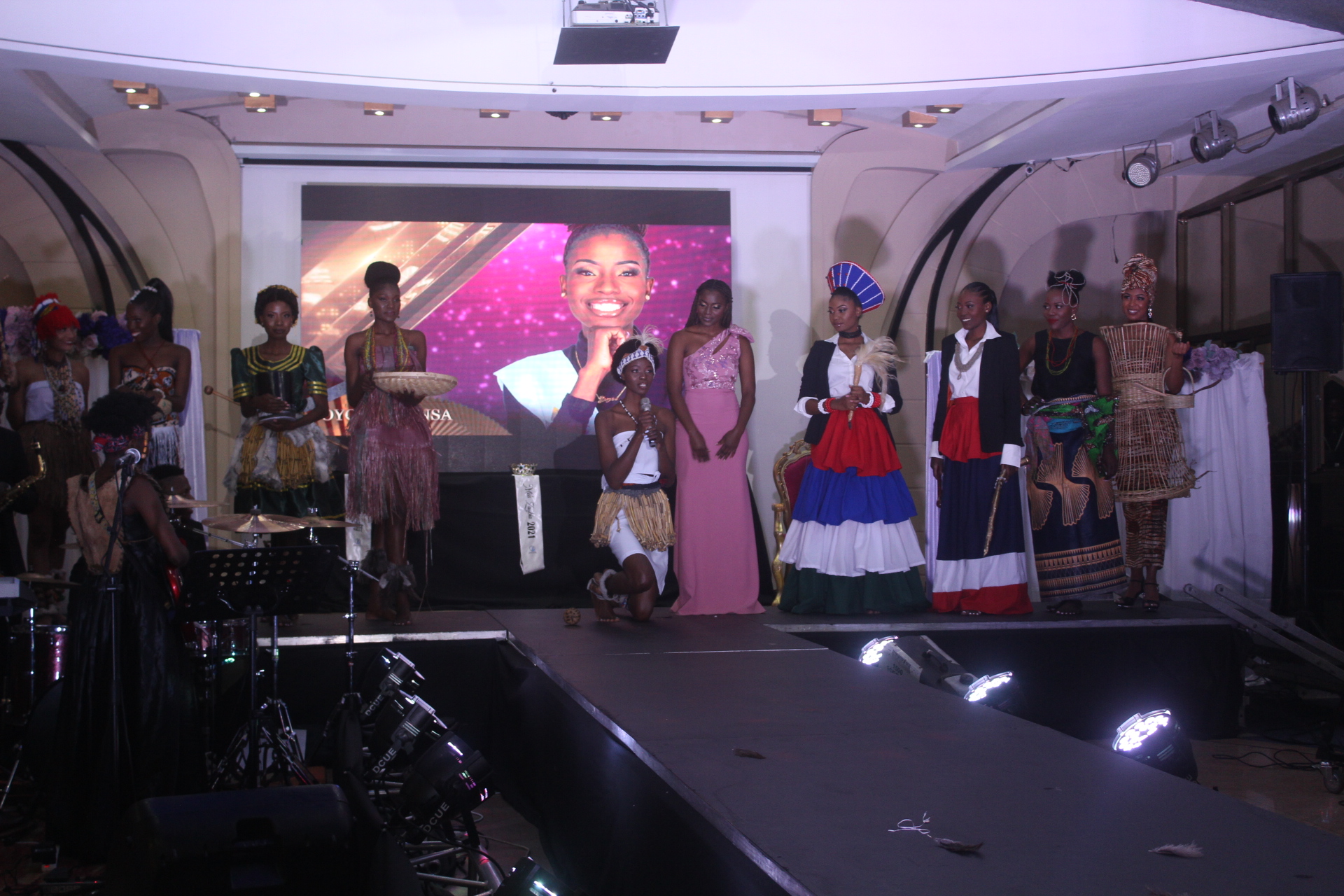
TWENTY-FIVE year-old Natasha Mapulanga was crowned as the new Miss Zambia, seven years after missing out on the crown in 2014.

For getting the ultimate crown, Natasha will represent Zambia at this year’s Miss World pageant.

The international relations and development analyst student, who was Second Runner Up in 2014, took over the title from her predecessor Vanessa Chinyemba after being chosen as the most impressive of the eight other participants at a colourful ceremony that was held at the Best Western Plus Hotel on Saturday, June 11, 2022.

Joyce Mwansa, 26, a laboratory technologist was picked as the First Princess while 26-year-old marketer Naboonga Mulenga walked away with the Second Princess title with 22-year-old entrepreneur Celine Mbunda settling for Miss Personality.

But in order to make it to the top five, the girls first had to impress the five-member jury in the four categories – Introduction, tradition, Zambian colours and evening wear.

The jury consisted of former title holders Elizabeth Mwanza, Mwangala Ikacana, Winfridah Mofu and entrepreneur Wika Kawina and fitness trainer Makungo Muyembe.

During the evening wear category, the nine contestants were reduced to five – Natasha, Naboonga, Celine, Taonga Kanyanta, 26, and Joyce.

As is tradition, the contestants, during the question and answer session, Natasha was asked by Elizabeth on what she aspires to be and why. In


response, she said: “I would aspire to be someone that adds value and inspires positive change in society.”

However, it was the confidence in Naboonga’s response when asked by Wika how she would define the current status of Zambia with regard to religion, politics, and the economy that excited the audience. It was a tough question.

The pageant was hosted by television and radio personality Michelo ‘Michie’ Malambo, who also happens to be a former Miss Zambia title holder herself.

Apart from the crown and an assured participation at the Miss World pageant, Natasha walked away with a year's supply of Swiss Arabian perfume, K50, 000 Mozo TV voucher, monthly supply of Movit and Sho’dor products, a brand new Mercedes Benz E20 to be given after successfully participating in the Miss World pageant and a cash prize of US$4000 to be paid to her within the year.

Others who made it to the finals are Taonga Kanyanta, 26, a science laboratory technologist; Nancy Mwansa, 20, a student and model; Febby Ngandwe, 25, a student and agro-entrepreneur; Eutray Simwatachela, 23, a front desk operator; and Venus Vlahakis, 24, a student.

Other past winners of the Miss Zambia title are Elizabeth Mwanza, Tukuza Tembo, Alice Banda, Cynthia Kanema, Precious Mumbi, Winfredah Mofu, Katanekwa Matundwelo, Christine Mwaba, Michelo Malambo, Mwangala Ikacana and Vanessa Chinyemba.

Reigning Miss Botswana Palesa Molefe was also in attendance at the grand finale that was also being televised on Mozo TV, Crown TV and other selected Zambian TopStar Channels while in Uganda it was on Capital TV, GH1 TV in Ghana and on Kiss TV in Kenya.

Soon after, musicians T Sean, Jae Cash and Pharaoh were tasked with the sole duty of entertaining the audience. As always expected, they never disappointed.


This article was also published in the Zambia Daily Mail newspaper of Saturday, June 18, 2022.

Thursday, 16 June 2022

AU SUMMIT, ZAMBIA IS READY! History shows Lusaka has been key to many international events

WITH the successful completion and commissioning of the US$65 million Kenneth Kaunda wing at Mulungushi International Conference Centre in Lusaka early this month, it is safe to proclaim that Zambia is back to hosting high-level international meetings.

More so, it is this same 2,500 seating capacity conference wing that was recently commissioned by President Hakainde Hichilema that is going to host the 41st Ordinary Session of the Executive Council of the African Union (AU) and the 4th Mid-Year Coordination Meeting (MYCM) of the AU and the Regional Economic Communities (RECS) next month.

This AU summit that is expected to have a total of 14 heads of state and over 8,000 foreign delegates will be held from July 14 to 17, 2022.

Now, that’s a huge number – and Zambia is ready!

Well, at least that is what Minister of Foreign Affairs and International Cooperation Stanley Kakubo indicated recently. He said the Government is committed to ensuring that Zambia successfully hosts the much-anticipated summit, which is expected to build the country’s image.

“My further appeal to the private sector is for you to consider sponsoring some of the budget outcomes that we shall incur. Benefits to be accrued from the summit will include boosting tourism and uplifting of the country’s image,” he said recently.

This will not be the first time Zambia hosts such a high-powered summit, and it shouldn’t be a big hassle pulling it off.

History shows and tells us that this has happened before, and it can happen again. Here is why!

Zambia, in September 1970, hosted the Third Conference of the Non-Aligned Movement where a preparatory meeting of Foreign ministers drafted a number of resolutions which were considered by the Summit Conference.

Then republican President Kenneth Kaunda (late) opened the conference by underlining non-alignment as “the natural choice at the time of increased hostility created by ideological conflicts in the bipolar world”.

The conference was organised in the context of the development of the policy of Détente, which in fact led to relaxing tensions between the Soviet Union and the West, yet this increased cooperation among superpowers potentially excluded the space for the initiative of Third World countries. It was organised six years after the conference in Cairo, something regarded as the longest period between the two conferences. 

Now, the location for this particular conference was in part selected in order to support Zambia, whose sovereignty and borders at the time were threatened by Rhodesia and apartheid-era South Africa.

It was at this conference that the “Declaration on Peace, Independence, Development, Cooperation and Democratisation of International Relations” and the “Declaration on Non-Alignment and Economic Development” were adopted. 

Fast forward to August 1979, the country yet again hosted the Fifth Commonwealth Heads of Government Meeting. Thirty-nine countries are recorded to have attended this high-level meeting that took place at Mulungushi International Conference Centre after a great deal of hesitation from then British Prime Minister Margaret Thatcher, who had never been to Africa before.

In fact, it is believed that she did not trust the African leaders, and having the meeting in Lusaka, just next to Rhodesia where the nationalist leaders there were agitating for majority rule, made her extremely uneasy.

It is said that Thatcher tried to persuade Queen Elizabeth that it would not be safe for her to travel to Lusaka to officially open the conference. Unfortunately for her, she did not succeed and when she came down, she ended up dancing with Dr Kaunda. 

Among the issues that were discussed at the conference included the situation in Rhodesia, the armed conflicts in Indo-China, the global growth of the refugee problem, the situation in Cyprus and southern Africa. The highlight, however, is The Lusaka Declaration of the Commonwealth on Racism and Racial Prejudice and a special declaration condemning apartheid.

It is this same meeting that led to the Lancaster House Conference, which eventually paved way for majority rule and the independence of Zimbabwe in 1980.

In July 2001, the country hosted the Summit of the Organisation of African Unity (OAU) that is today regarded as the ‘birthplace’ of the African Union.

The summit, which was also attended by then United Nations Secretary General Kofi Annan, saw the launch of the African Union. “This summit holds a great promise for Africa’s peoples – the promise that it will be remembered for launching the African Union, and setting the continent as a whole on a firm path to peace and development. 

“But this promise will not be realised easily. Unless it is pursued with singular determination by you, Africa’s leaders at the beginning of the 21st century, it will not succeed. This historic effort will require leadership, courage and a willingness to depart from the ways of the past, if it is to do for Africa what the European Union has done for Europe,” reads his speech in part.

After a transition period, the African Union replaced the OAU in July 2002. In 2004 the AU’s Pan-African Parliament was inaugurated, and the organisation agreed to create a peacekeeping force, the African Standby Force, of about 15,000 soldiers.

Going by these and many other past scores and successes, coupled with the recent infrastructure development drive, it is safe to indeed proclaim that the country is ready to host the Mid-Year Coordination Meeting.

And some briefs about this upcoming summit are that it will mainly focus on the status of regional integration, while the 55-member Executive Council will meet prior to the Mid-Year Coordination Meeting to prepare documentation and also discuss the budget of the Union for 2023.

It will bring together the bureau of the Assembly of the AU, the Regional Economic Communities, the AU Commission and the Regional Mechanisms.

It is also associated with the institutional reforms of the AU, particularly the pillar on managing the business of the Union efficiently and effectively, at both political and operational levels, and was instituted by an Assembly decision in 2017, and the first such meeting held in July 2019 in Niamey, Niger. 

This article was also published in the Zambia Daily Mail newspaper of Friday, June 17, 2022.

IS ROAD USAGE BETTER WITH LESS CHECK POINTS? It was not uncommon for some corrupt officers to openly tell motorists to 'cough up'

THERE is no doubt that roadblocks obviously exist for a worthy cause – which is mainly to ensure the safety of all road users. But three checkpoints on a seven kilometre stretch is but just an inconvenience to not only motorists, but passengers too.

Whereas the scenario may have been similar in other parts of the country, the one above is what it felt like to drive from the Hybrid round-about to town on the Great East Road.

Traffic police officers would mount a checkpoint at the Marshlands area, near the University of Zambia. A few yards away, another group of traffic officers would be near the Munali round-about.

Going further up, before finding another checkpoint at the Zesco head office, one would have most likely passed the traffic officers with a mounted speed trap that is usually mounted in the Northmead area, near the Manda Hill foot bridge.

Now, that was not only a nightmare, but also an inconvenience to both motorists and the passengers. The road blocks on every street corner were grinding traffic to a halt, and inconveniencing citizens. Most importantly, it was becoming a breeding ground for corruption.

It was not uncommon for some corrupt officers to openly tell motorists to ‘cough up’ before being allowed to proceed.

All this, leading to the question of whether or not, the road blocks were serving their intended purpose or they had just become an easy route for some Zambia Police officers to make a quick buck.

Noticing  this and barely a month in office, Minister of Home Affairs and Internal Security Jack Mwiimbu in what may as well be his first deed as minister, ordered that there be no road blocks mounted for the sole purpose of syphoning money from motorists when police officers are broke.

Mr Mwiimbu said only designated security check points would exist on the roads. He said government realised that the random snap traffic checkpoints were inconveniencing the motorists and traveling public.

He said: “Instead, government has emphasised to maintain the police security check points dotted across the country and also underlined motorised patrols on public roads particularly in the urban areas.”

The banning of these random traffic checkpoints was necessitated by the numerous complaints from members of the public that traffic road blocks were too many and that in several ways hampered the delivery of goods and services to the people.

“Apart from that, government also acted swiftly to address the many complaints and speculations from motorists and the general public that traffic officers were receiving bribes from motorists,” clarified Mr Mwiimbu in a response to our press query.

He states that the misconduct of motorists on public roads was one aspect that government introspected about and the idea of enhancing motorised patrols by the Zambia Police Service traffic section and the Road Transport and Safety Agency (RTSA) was recommended to deal with any erring motorists.

It is hoped that the move will mitigate misconducts on public roads. Mr Mwiimbu does not think that the move will affect government’s revenue collection in form of fines.

He states: “The fines which are collected by the traffic section of the Zambia Police Service are legally provided for under the Criminal Procedure Code Sec. 221. All the police security checkpoints and the motorised patrols of the Zambia Police traffic section are still effecting the fines on erring motorists and all those driving defective motor vehicles on public roads.”

He adds that the whole idea was to apart from reduce the inconvenience on motorists and curb on the alleged corruption by some officers, continue collecting the revenue on behalf of the government.

Mr Mwiimbu is also calling for a mindset change among motorists for carnages on the roads are to be reduced. He says investigations have shown that excessive speed is the leading cause of fatal road accidents.

“Allowing traffic snap checkpoints may help less on addressing accidents and misconduct on public roads. Government has realised that there is an urgent need to help change the mindset of most motorists through sensitisation campaigns on their part to begin to observe road signs and where possible, avoid over speeding” he states.

It is for this reason that, in order to enhance road safety, government through the Zambia Police and the RTSA intends to step up sensitisation programmes. Mr Mwiimbu further reveals that government shall soon commission the safe city project which has seen security cameras in all provincial centres and some border towns, once all the works are completed.

He says all this, is in an effort to enhance not only road safety, but also the general safety of the public. “Once commissioned, the project shall completely change the way investigations are done in Zambia, and definitely enhance the safety of our people and their property.”

As is obviously expected, this decision sits very well with the Bus and Taxi Owners Association of Zambia (BTOAZ) and also the Commuters Rights Association of Zambia (CRAZ).

BTOAZ national spokesperson Amis Daudi says bus operators were most times inconvenienced, leading to loss of revenue. He says, even with the ban on random roadblocks, motorists should comply and observe all road traffic related rules.

“Having a lot of road blocks doesn’t help things at all. It just used to consume a lot of time for the drivers. What is important is road safety and not policing,” he said.

Mr Daudi adds that road safety enforcement officers should resort to use of technology such as camera to monitor and enforce road traffic laws.

“That way, traffic will be flowing smoothly and all vehicles with defects can always be intercepted at designated road blocks or even at some toll plazas,” he said.

With the same tone, CRAZ president Aaron Kamuti said the random checkpoints never served their intended purpose. He said most officers were using them to enrich themselves.

“We are also appealing to the Zambia Police to consider removing the checkpoint at 9 Miles. It is just causing congestion and damaging the road at that point. If they cannot take it back to Kabangwe where there is a concrete slab, let them just remove it altogether because repairing that part of the road will be expensive,” he said.

The mandate to mount road blocks by the police service is provided for under the Road Traffic Act No. 11 of 2002.

This article was also published in the Zambia Daily Mail newspaper of Tuesday June 14, 2022.

Pick of the day

GIVING CREDIT WHERE IT'S DUE: What Sampa The Great is teaching the Zambian music industry

Credits on the song LET'S be honest for a moment. When an artist releases a brilliant music video, where does our attention usually go? ...

Top Hits